
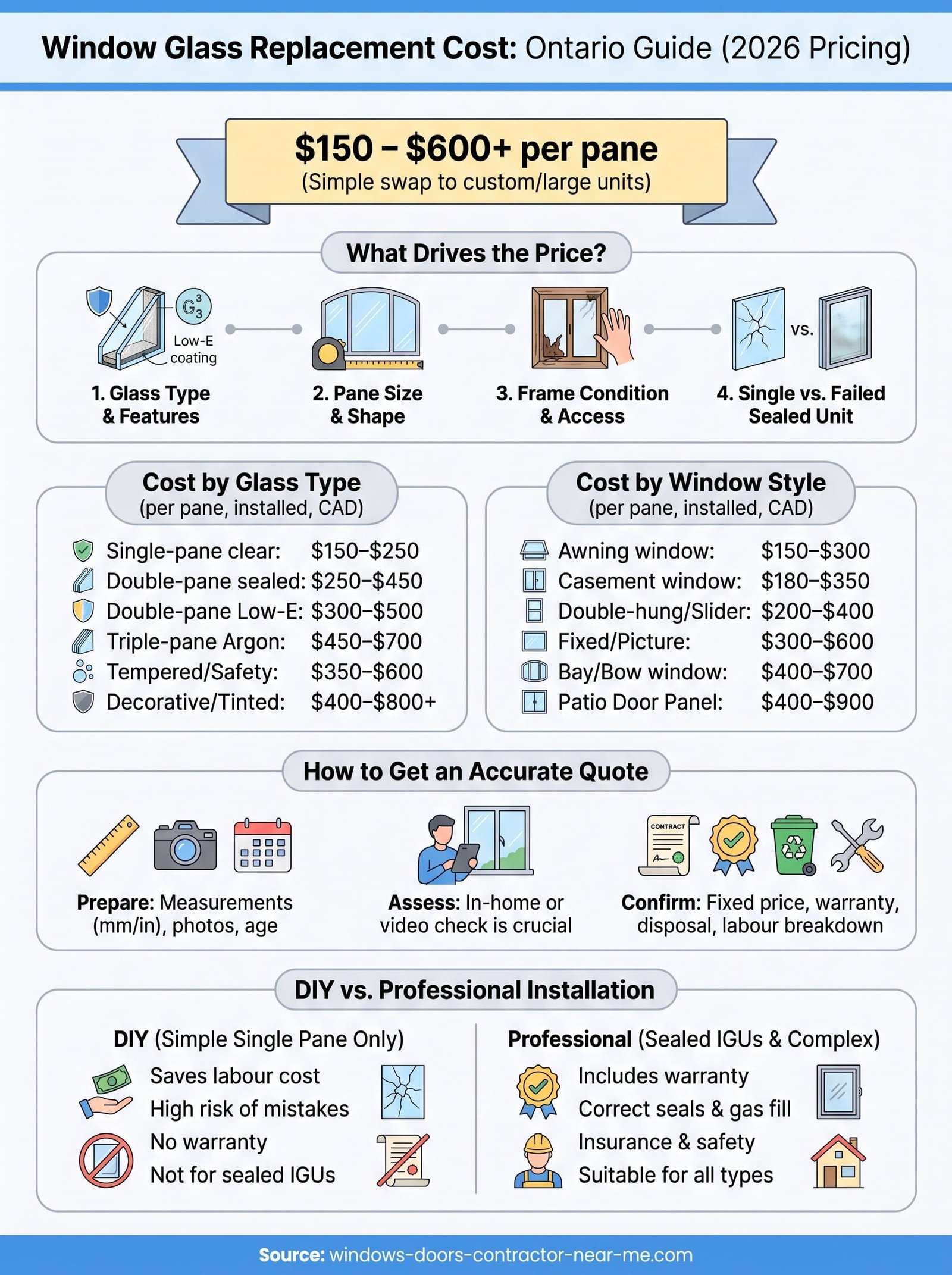
A cracked pane or a foggy seal between the glass usually shows up at the worst time, right before a cold snap or a heat wave. Before you call anyone out, you want a straight answer on window glass replacement cost, not a vague "it depends" from the first contractor you ring. Most homeowners in Ontario end up paying somewhere between $150 and $600 per pane for a straightforward swap, though double-glazed units and larger custom shapes push that figure higher.
The cost of replacement glass for window repairs shifts based on a handful of clear factors: glass type, frame condition, pane size, and whether you need a full sash replacement instead of just the glass insert. A single cracked pane on an older single-hung window costs far less to fix than resealing a failed double-pane unit in a bay window.
We've spent nearly two decades manufacturing and installing windows across Ontario, so this guide breaks down what actually drives your quote, from Low-E coatings to Argon fills, and gives you realistic 2026 pricing so you can budget with confidence rather than guesswork.
Why window glass replacement costs vary so much
Ask five contractors for a quote on the same broken window and you'll likely get five different numbers. That's because window replacement glass cost isn't a single fixed price, it's the sum of several variables stacking on top of each other: the type of glass you choose, how big the pane is, what shape your frame takes, and how much labour is involved in removing the old glazing safely. A basic single-pane repair on a small casement window sits at the low end, while a custom-shaped, triple-glazed unit in a bay window sits at the top. Understanding each factor lets you spot a fair quote from an inflated one.
Glass type and performance features
Glass isn't just glass anymore. Standard clear glass is the cheapest option, but most Ontario homes now use insulated glass units (IGUs) with two or three panes sealed together, often with a Low-E coating and Argon gas fill between the layers to cut heat loss. Each added feature raises the price, but it also lowers your energy bills over time, which the Government of Canada's Energy Star program recognises through its efficiency ratings for windows and doors.
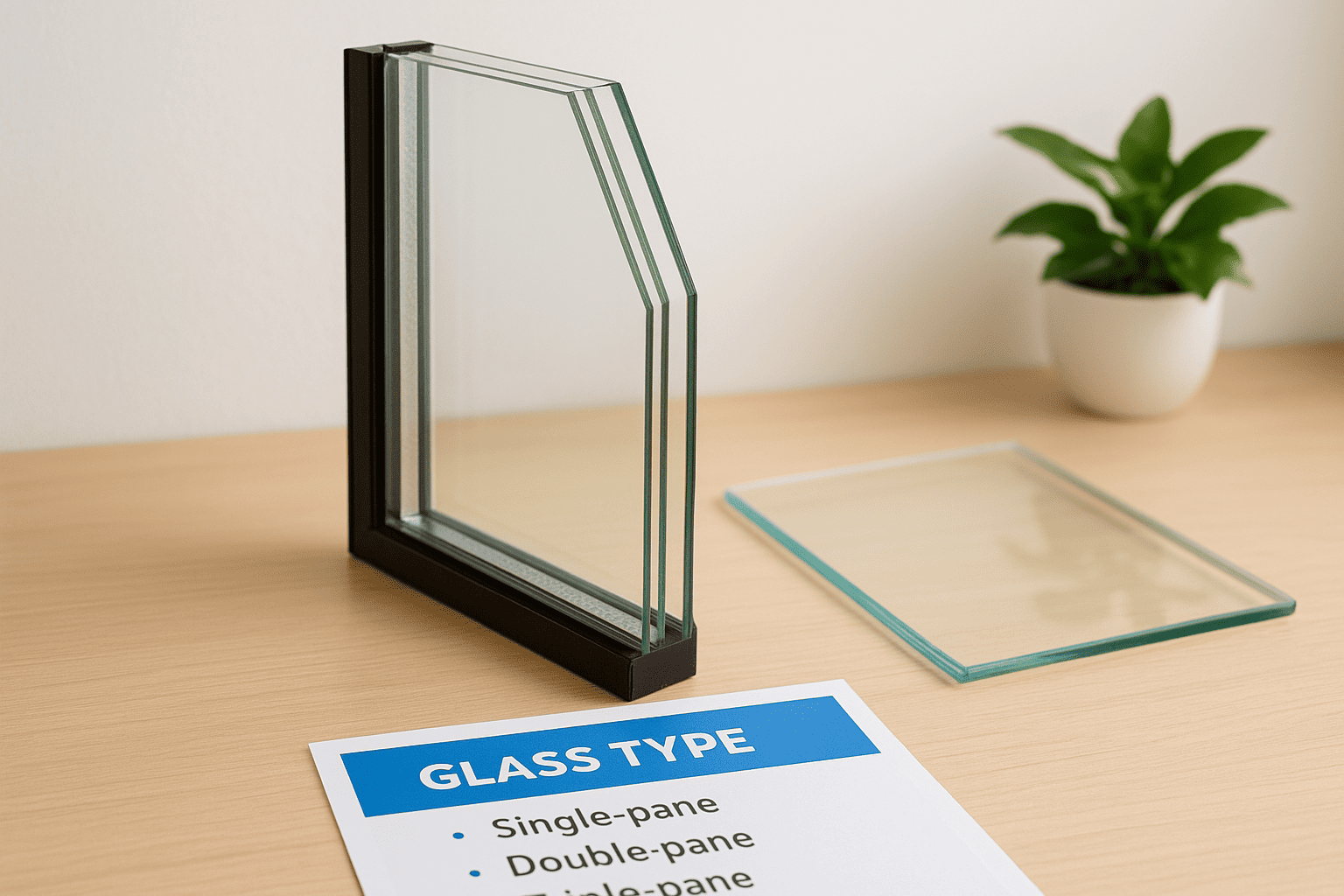
| Glass type | Typical cost per pane (CAD) |
|---|---|
| Single-pane clear glass | $150–$250 |
| Double-pane sealed unit | $250–$450 |
| Double-pane with Low-E coating | $300–$500 |
| Triple-pane with Argon fill | $450–$700 |
| Tempered or safety glass | $350–$600 |
| Decorative, tinted, or beveled glass | $400–$800+ |
Security glass, obscured glass for bathrooms, and custom tints all sit above standard clear glass because they require specialised manufacturing runs rather than off-the-shelf stock.
Pane size and window style
Bigger openings mean more material and more careful handling, so size drives price almost as much as glass type does. A small awning window pane might run you $150, while a large picture window or a custom-shaped unit built for a bay or bow configuration can climb past $600 before installation labour is even added. Standard rectangular shapes are always cheaper to source than arched tops, angled corners, or oversized patio door glass, simply because manufacturers have to cut custom templates for anything outside the norm.
Frame material and access
Your frame plays a bigger role than most homeowners expect. Vinyl frames generally allow the glass insert to pop out cleanly, keeping labour costs down, while older wood or aluminum frames sometimes need extra work to free a stuck or painted-over sash. Frame condition also matters: rot, warping, or a bent sash means the installer may need to repair or replace parts of the frame before the new glass will seat properly, which adds to your final bill regardless of the glass itself.
Single-pane cracks versus failed sealed units
Great pricing question homeowners ask is why a foggy double-pane window sometimes costs more than a fully broken single-pane one. The answer comes down to the seal. A cracked single pane is a straightforward glass swap, but a failed IGU seal means moisture has gotten between the layers, so the entire sealed unit needs replacing, not just a sheet of glass.
A foggy double-pane window almost always costs more to fix than a cracked single pane, because you're replacing a whole sealed unit, not just a sheet of glass.
Insulated units also require precise spacer bars and gas-fill equipment during manufacturing, which single-pane glass never needed, adding both material and labour cost to the final glass window replacement cost you're quoted.
How to get an accurate glass replacement quote
Getting a number you can actually trust means giving a contractor enough detail to price the job properly, not just describing it as "a broken window." Measurements matter more than anything else: width, height, and glass thickness all change which stock sizes or custom cuts an installer needs to order. Photos help too, especially close-ups of the frame, any visible cracks, and the corners where seals typically fail first. When you skip these details, you force the contractor to guess, and guesses tend to land on the high side to cover their risk.
What to have ready before you call
A little preparation on your end speeds up the quoting process and keeps the numbers accurate. Before reaching out for a replacement window glass cost estimate, gather the following:
- Exact measurements of the pane (width x height, in millimetres or inches)
- The window's age and manufacturer, if known
- Whether the glass is single, double, or triple-glazed
- Photos of any visible damage, fogging, or frame rot
- Your home's postal code, since regional pricing and travel fees vary
Questions that separate a real quote from a guess
Insist on an in-home or video assessment rather than accepting a phone estimate for anything beyond a small, simple pane. Reputable installers, including our own team at MK Windows and Doors, will ask to see the window in person because frame condition and glass type aren't always obvious from a description alone. Ask whether the quote is a fixed price or an estimate subject to change once the installer opens up the frame, and get it in writing either way.
The most accurate glass replacement quote always comes from someone who's physically seen your window, not from a number given over the phone.
Once you're comparing offers, check that each one covers the same scope. A cheaper number sometimes excludes disposal of the old glass, travel charges, or warranty coverage, which then get tacked on later as surprise line items.
| Item to confirm | Why it matters |
|---|---|
| Fixed price vs. estimate | Avoids surprise charges after work starts |
| Warranty length | Protects you if the seal fails again |
| Disposal fee included | Old glass and sashes need proper handling |
| Installer licensing/insurance | Protects your home if something goes wrong |
| Timeline for custom glass | Custom shapes and coatings take longer to source |
Finally, don't be shy about asking for a cost for window glass replacement breakdown that separates materials from labour. This lets you see exactly where your money is going and makes it far easier to compare quotes from different companies apples to apples, rather than trusting a single bottom-line figure that could be hiding all sorts of assumptions.
Window glass replacement cost by type and size
Every window style handles glass replacement differently, so the same crack costs different amounts depending on the frame it sits in. A casement window with a single hinged pane is usually the cheapest to reglaze because the sash lifts out flat and the glass is a simple rectangle. A bay or bow window, on the other hand, often has three or more angled panes working together, so a single broken section can mean matching curvature, colour, and coating across the whole unit, which pushes the window pane replacement cost well above a standard slider or fixed pane.
Typical cost by window type
Size and shape complexity explain most of the spread you'll see between quotes for what looks like a similar job. The table below reflects what Ontario homeowners typically pay per pane, installed, based on our own project pricing across the region.
| Window type | Typical glass replacement cost (CAD) |
|---|---|
| Awning window | $150–$300 |
| Casement window | $180–$350 |
| Double-hung or single slider | $200–$400 |
| Fixed or picture window | $300–$600 |
| Bay or bow window (per pane) | $400–$700 |
| Patio door glass panel | $400–$900 |
Bay, bow, and patio door glass cost more not because the glass itself is special, but because matching curvature, size, and finish across multiple panes takes far more precision.
How overall pane size changes the price
Going bigger doesn't just mean more square footage of glass, it also means more careful handling and often a second installer on-site to avoid cracking the new unit during placement. A large picture window spanning six feet or more can double the labour time compared to a small awning pane, even when both use the same double-glazed, Low-E glass. Patio doors sit at the top of the size scale, and configurations up to twelve feet wide, common in many Ontario homes, require reinforced handling equipment and sometimes a crane or extra crew for second-storey installs.
Multiple panes and grid patterns
Homeowners with grille or grid patterns sometimes assume only the broken section needs replacing, but true divided-lite windows often require swapping the whole sealed unit since the grid sits between the glass layers rather than on the surface. Simulated grids applied to the exterior are usually cheaper to work around, since installers can remove and reattach them without disturbing the seal. If your window has genuine divided panes rather than a decorative overlay, mention this upfront, because it changes both the cost for window glass replacement and the turnaround time your installer quotes you.
DIY versus professional glass replacement costs
Cutting your own glass repair costs sounds tempting when you're staring at a $300 quote, but window glass work punishes mistakes more than most home projects. A DIY window pane replacement can save you the labour portion of the bill, sometimes $80 to $150, but only if the pane is a simple rectangular single-glazed unit in a frame you can access easily. Anything involving a sealed double or triple-glazed unit, a custom shape, or a second-storey window tips the balance firmly toward hiring a professional.
What DIY actually saves you
Sourcing the glass yourself from a local glazier typically costs less than a full installed quote, since you're only paying for materials. A rough DIY budget looks like this:
- Glass pane cut to size: $40–$120
- Glazing points, putty, or vinyl glazing tape: $10–$20
- Basic tools (putty knife, safety gloves, glass cutter): $20–$40
- Your own time: usually 1–3 hours per pane
That adds up to real savings on a straightforward single-pane repair, particularly on a garage window or shed rather than a main living space.
Where DIY glass replacement costs you more
Mistakes with glass are expensive and sometimes dangerous. Cracking a new pane during installation means buying it twice, and improperly seated glazing points leave gaps that let water and cold air straight through the frame, undoing any energy savings you'd hoped for. Insulated glass units are almost impossible to reseal at home since they need factory equipment to inject Argon gas and bond the spacer bar correctly, so a DIY attempt on a fogged double-pane window usually just delays the inevitable professional call.
DIY glass replacement works fine for a small single-pane repair, but it almost never works for a sealed double or triple-glazed unit.
When professional installation pays for itself
Professional installers bring insurance, correctly rated glass, and a warranty that covers seal failure, none of which a DIY job includes. For anything beyond a basic single pane, the cost difference narrows once you factor in wasted materials and repeat trips to the hardware store.
| Factor | DIY | Professional |
|---|---|---|
| Upfront cost | Lower | Higher |
| Risk of costly mistakes | High | Low |
| Warranty coverage | None | 5+ years typical |
| Suitable for sealed IGUs | Rarely | Always |
| Time required | Hours to days | Same-day in most cases |
Bigger or custom windows almost always favour professional installation, both for safety and for the warranty protection you'd otherwise give up entirely.
Planning your window glass budget
Set your budget around the type of glass and window you actually have, not a single average number pulled from the internet. A cracked single pane on a casement window sits at the low end, while a failed sealed unit in a bay window or patio door sits at the high end, and both call for different planning. Treat the tables above as your starting point, then get a proper in-home quote before committing to any figure, since frame condition and access always shift the final price.
Getting this right matters more once you weigh energy loss, drafts, and resale value against the upfront repair cost. If you're ready for real numbers on your own windows, book a free in-home consultation with MK Windows and Doors and get a factory-direct quote built around your home, not a generic estimate.